Oversea Success of TikTok

TikTok, an Internet product that has gone overseas, has succeeded overseas. All along, Chinese Internet companies copy from America to China, but the trend has changed in recent years. Chinese Internet companies have started to go out, such as 37games in the field of games, UC Web in the field of browsers, TikTok in the field of short video. We’re going to talk about this Internet product that are going overseas in China’s short video industry.

Andy Warhol said, “Everyone can be famous for 15 minutes.” In the age of mobile Internet, it takes only 15 seconds for a person to become famous. TikTok, which can drain the tide in 15 seconds, has become a popular short video product all over the world.

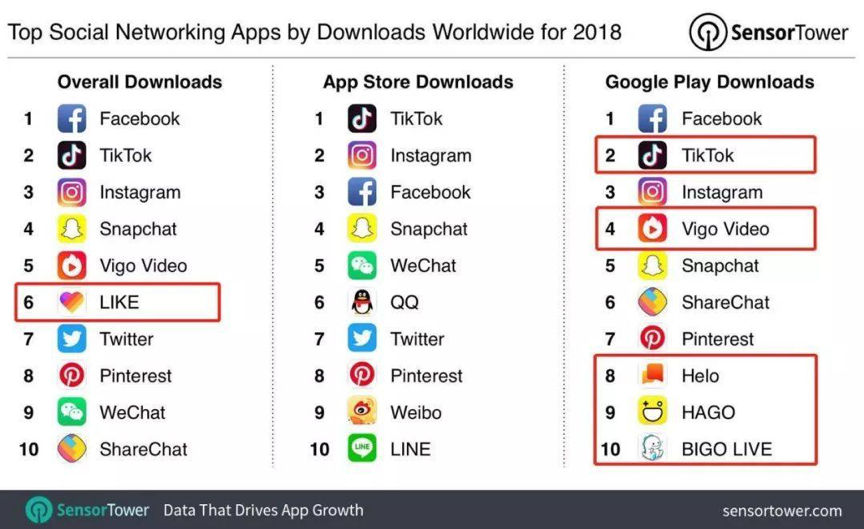
Similarly, applications from China, Moscal. ly launched in 2014 and TikTok launched in 2016, are entertainment short video applications based on singing and dancing. Musical. ly first caught the attention of young people in the United States and Europe, while TikTok first caught fire in Asia.

Due to the high overlap of products and users, Bytedance completed the acquisition of Musical. ly in November 2017 at a cost of $1 billion, while TikTok and Muscle. ly maintained independent brand operations. In August this year, TikTok and Musical. ly formally merged to launch a new short video platform. The new TikTok turned into a social starlet with 500 million active users around the world. At present, it has covered more than 150 countries and regions in the world and has become the fastest growing mobile phone application in the world.
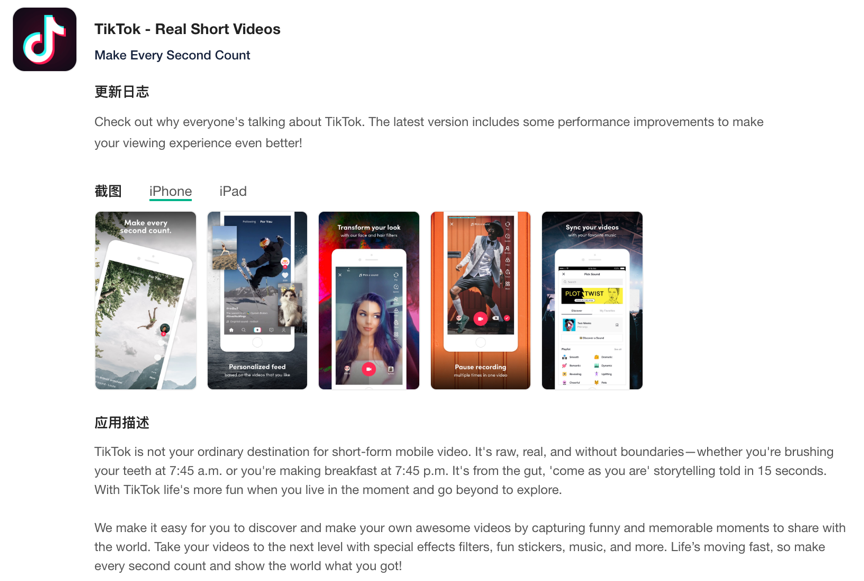
After renamed TikTok, the trembler has not simply pasted and duplicated the domestic model and content, but has been completely revised according to the different characteristics of each country and region. And in Korea and Japan, TikTok’s propaganda strategy is slightly different.

In the past, it was difficult for China’s Internet products to be widely promoted and applied in the global market. Why can TikTok of Bytedance succeed overseas?
First, real overseas localization operation

Thanks to the accumulated experience in auditing at home, TikTok set up a strict auditing system in accordance with the social conditions of the United States at the beginning of its establishment. Illegal elements may have been blocked outside by TikTok’s filters.

Of course, you can understand that Americans are more interested in the rhythm of music, or that the United States is full of fried chicken, no special food. TikTok focuses on local operations, localizes survey data, and then uses local cultural thinking to analyze the results of data processing, which is the basis for a “foreign” app to quietly integrate into the local.

Second, all-round promotion of mainstream and specialty

Bytedance is one of the few companies specializing in the formation of growth teams in China. Its user growth team has made outstanding contributions to the explosive growth of many product lines under Bytedance. Bytedance also applies this strategy to the overseas promotion of TikTok. The local KOL operation mentioned above is on the one hand, and on the other hand, it uses professional and mainstream advertising promotion.

In addition to offline advertising, like the Chinese market, the length of online users in foreign countries is monopolized by several mainstream giants. Therefore, as a new app, advertising on the most mainstream platform is almost one of the core options. Headline advertising has two characteristics: first, calculating the ROI of advertising with great fineness, and second, paying special attention to a wide range of issues. When these two points are well done, the effectiveness of advertisements can be greatly improved, such as the launch of TikTok on YouTube in Japan. TikTok is one of the important customers of Google. It has put a considerable number of advertisements on Google’s search, YouTube, Google Play Store and Google Advertising Alliance. As one of the most important advertisement providers in the international market, Google has the advantage of full coverage and accurate data. TikTok has entered many markets all over the world, so it needs a network covering many regions. In addition, TikTok has a high requirement for ROI in advertising, so it needs very strict data support and data evaluation in all aspects of the launch. Google’s advertising network has been in this field for a long time, and accumulated a large number of credible and accurate data and experience in the area of advertising data optimization.

In the field of short video, the East and West Internet industry has finally formed a consensus on short video products. Musically and Tik tok are both products made by local teams in China. As successful seagoing products, they are regarded as international apps. This is an achievement that Chinese Internet products did not achieve before. According to Techcrunch, a US technology media, Facebook is testing a music video application in a form similar to TikTok. To counter the rapid development of TikTok in the United States and other places. In the future, we can expect TikTok to become a global product.

Different Situation of Bicycle-sharing in China and the United States: the Dilemma and Opportunity

Development history of bike-sharing

Shared bicycle refers to the bicycle sharing service provided in cities, campuses, etc. Chinese shared bicycles were started and became popular in 2016 since it solves the “last mile” travel problem of users and also saves the time cost of users and the cost of services. At that time, all the streets in China could see people riding a shared bicycle. However, in recent years, after Mobike was acquired by Meituan for US$2.7 billion, the other giant of the shared bicycle, ofo, was also deadlocked, and the overseas business was gradually withdrawn or suspended. Moreover, due to supplier disputes, the shared bicycle ofo was frozen by the court for three times. With the fermentation of ofo incident, people’s trust in the sharing industry has been lost.

Conversely, the shared bicycles are still fire in the United States. It is reported that Jump began to affect the service orders of its parent company, Uber, the largest online car service provider in the United States. In July 2018, Uber released a report that the number of online car orders decreased by 10%, while the combined orders for Jump bikes and Uber.com increased by 15%. At the same time, Lime, a shared travel platform known as “ofo’s imitator”, announced that it has completed a $310 million D round of financing. Lime’s post-mortem valuation reached 2.4 billion US dollars.

We want to discuss that why shared bicycles that bring convenience to people will go down. We hope to analyze the reasons for the decline of Chinese shared bicycle industry through the comparison of shared bicycles at China and US.

Lack of regulatory guidelines

Compared with the decline of domestic shared bicycle companies, the US shared bicycle industry has developed well. We take LIME as an example, a US shared bicycle company, which has now expanded its business to share skateboards and cars and has achieved a tenfold increase in income. This is due to Lime’s barriers to competition in both supply chain and government relations.

On the one hand, in any city in the United States, if you want to lay a shared bicycle, you have to get a local business license, which means that no company can do large-scale expansion like China. For the company, it also means that blind expansion is not possible, but the pace of development is maintained, so that it can ensure that its funds are working well. Lime has licensed more than 130 city governments and schools, and more than half (nearly 100) are exclusive partners.

On the other hand, maintaining government relations is also crucial. LIME uses cooperative means to build shared travel into a part of urban public transportation which means profitable sharing of bicycles and public resources should be organically combined rather than preempting each other.

After collecting and sorting out Chinese shared bicycle management practices, we found that China did not have a clear national-level management norm. Secondly, the regulatory standards introduced between cities were different. Then, we found that no city has limit for the capacity of shared bicycles, which may be the cause of excessive and unsupervised sharing bicycles in many cities. And also, the excessive bicycles have caused urban congestion and occupied too many public resources. This will make the company and the government form a confrontation, which is not conducive to long-term development.

Diversified business

From the development path of the above-mentioned shared bicycle platform in the United States, they are more to use the shared bicycle as an entry point, and gradually expand the business to other areas.

For example, Lime initially provided shared bicycle services, and later expanded to share scooters, electric bicycles and shared cars, covering the different travel needs of users for the last 1-5 kilometers. In fact, with the development of the business, the scooter has become the main business of Lime rather than the bicycle. More than 80% of Lime’s financing has occurred since the launch of the scooter business. Lime called himself a travel company rather than a simple shared bicycle gradually. And a few months ago, Jump also introduced a new generation of pedal-assisted bicycles with 4G capabilities, on-board diagnostics, retractable cable locking and phone installation.

In view of this, some domestic shared bicycle platforms are also moving closer to this aspect. For instance, before Mobike was acquired by Meituan, there was a plan to enter the shared car. After being acquired by Meituan, Mobike also launched a shared electric bicycle as an extension of shared bicycles in some cities in China.

Conclusion

The reason why these platforms can take root in the United States is mainly due to the fact that the operating model is very different from the domestic shared bicycles. Competition barriers have been formed in both supply chain and government relations in the United States. In addition, it is impossible to achieve profitability by bicycle riding alone. Diversity is essential to the development of the platforms.

Although it is not the golden time for sharing bicycles in China at this stage, the demand for the last mile has always existed. The above-mentioned still-surviving integrated mobile travel platform is the “successful way” that some shared bicycle companies have found in their exploration. Time is needed for the development of the industry and platforms.

Urbanization in China

  • The meeting of the 20th China Development Forum gathered together five experts and business leaders to discuss how to achieve a higher level of urbanization as a new driving force of the Chinese economy.
  • Li Tie, director of the Center for Reform and Development of Chinese Cities and Small Towns, speaks about China urbanization at the meeting of the 20th China Development Forum held in Beijing on Feb. 16, 2019.

China’s Great Step in Urbanization

2018 marked the 40th anniversary of reform and opening-up in China. To a large extent, reform and opening-up liberated China’s social productive forces, which drastically changed China’s urban and rural areas, improving people’s lives and livelihoods. In this sense, urban development is the concentrated embodiment of the achievements of China’s reform and opening-up.

During the four decades of reform and opening-up, China has experienced the largest and fastest industrialization and urbanization in the world. Many new cities have come up.

Urbanization Drives Growth of Domestic Demand

From the external environment, with the emergence and development of trade frictions, the external environment of China’s development has undergone tremendous changes. Under the escalation of demands for domestic demand, urbanization has become a powerful option for stimulating domestic demand. Relying on high investment development model is not sustainable for the economy situation any more. At this time, we must rely more on marketization and urbanization.”

From the experience of some other countries, such as Japan and Korea, we can see that when the rate of urbanization is below 60%, the economic development of these countries was on the upward trend; and when the rate is above 60% even 70%, the economic growth rate declined rapidly and developed at a low level. It can be seen that the above-mentioned countries rely on domestic demand and urbanization to promote their economy, and urbanization is a very important factor.

The Sustaining Urbanization Dividend 

According to the data in 2018, China’s urbanization rate of permanent residents approached 60 percent last year; however, the rate of officially registered residents was estimated to be around 44 percent. It means many people work in the cities but have rural household registration documents, which means they don’t have access to the same welfare amenities as those registered in cities. 

Generally speaking, the period that the urbanization rate rises from 30% to 70% is a period of rapid urbanization. Among them, the urbanization rate of 50% is an important turning point. Taking this as the boundary, the interval of 30% to 50% is the acceleration period; the interval of 50% to 70% is the deceleration period (Wei Houkai, 2011). “China would continue to enjoy the urbanization dividend for between 15 and 20 years, as the urbanization rate of registered residents increased to 70 percent.” Li believes that urbanization will have a positive impact on stimulating consumption growth and driving employment growth. It will be a process of transforming migrant workers into urban citizens and using consumption to raise the quality of life in cities. In addition, with urbanization, the commercialization of agricultural products will be promoted, and the agriculture structure will be adjusted; on the other hand, the full flows of rural resources can also feed-back cities and towns. 

Transformation of Urbanization  

Seeing from the current situation, the urbanization is facing a transformation crisis. In terms of the internal relationship between cities, “At present, the internal relationship between Chinese cities is not an equal market competition, but a hierarchical relationship. There is a core city in the urban cluster that drives the surrounding cities.” High-tier cities develop real estate through land sales, and the continuous expansion has led to the growing and increasing cost of urban shops. Excessive land prices do harm to the population entering the city and the realization of urbanization dividends. Excessive costs have created a natural gap between cities and peasants entering the city, hindering further urbanization and declining urban inclusion.

In view of the above situation, we should first respect the laws of the market that we should not exclude the population or exclude industries through administrative means. At the same time, we should also reduce costs, allow resources to flow to low-cost space, and release more vitality of small cities and small towns, the vitality of the peasants entering the city and the potential vitality of releasing the land.

Secondly, we should solve the division within the urban agglomeration. We should establish an integrated cooperation incentive mechanism and guarantee mechanism, such as the assessment of cross-regional urban agglomerations, and the integration of urban agglomeration development with central financial transfer payments and audits of major projects such as infrastructure. Etc., thereby promoting the development of urban agglomerations.

In addition, a series of market-oriented reforms should be promoted, such as peasants’ transformation into urban inhabitants, household registration system, social security, cross-provincial cross-border, and so on. At the same time, we should vigorously implement the link between people and land to achieve a balance between supply and demand, optimize the spatial layout, promote the balance of occupation and residence, develop rail transit and connect the cities, and improve large urban population control policies, building an international metropolis, and enhancing urban vitality.

References

Wei Houkai, 2011: “China’s Urbanization Strategy Adjustment Thoughts”, “China Economic and Trade Guide”, Issue 7

Zhang Liying, China.org.cn, February 20, 2019: “Reforms needed to fully unlock potential of China’s urbanization”

Beautiful Greater Bay Area

Hong Kong Press Ta Kung Pao said that the official development plan for the Guangdong, Hong Kong and Macao Greater bay area, which has been discussed for a long time, would be announced in the next week.

On January 18,Shenzhen government report was released and showed that Shenzhen’s GDP in 2018 hit RMB2.42 trillion yuan, ranking 5th in Asia. Before that, Guangzhou’s GDP in 2018 was also reported to be RMB2.3 trillion yuan. Up to now, although HongKong’GDP data is not released officially, shining performance in economic growth of these cities in Guangdong, Hong Kong and Macao Greater bay area attract more global attention.

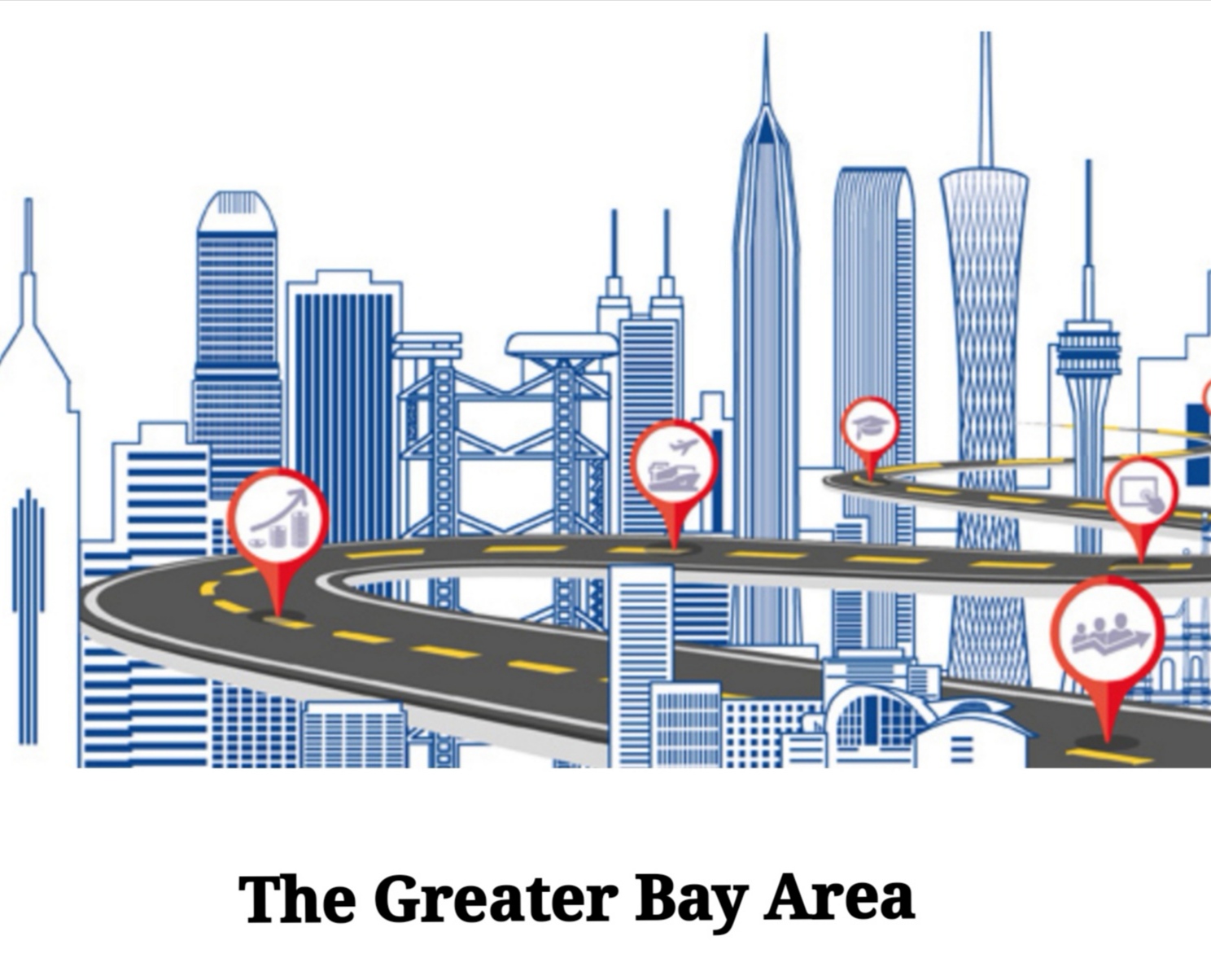
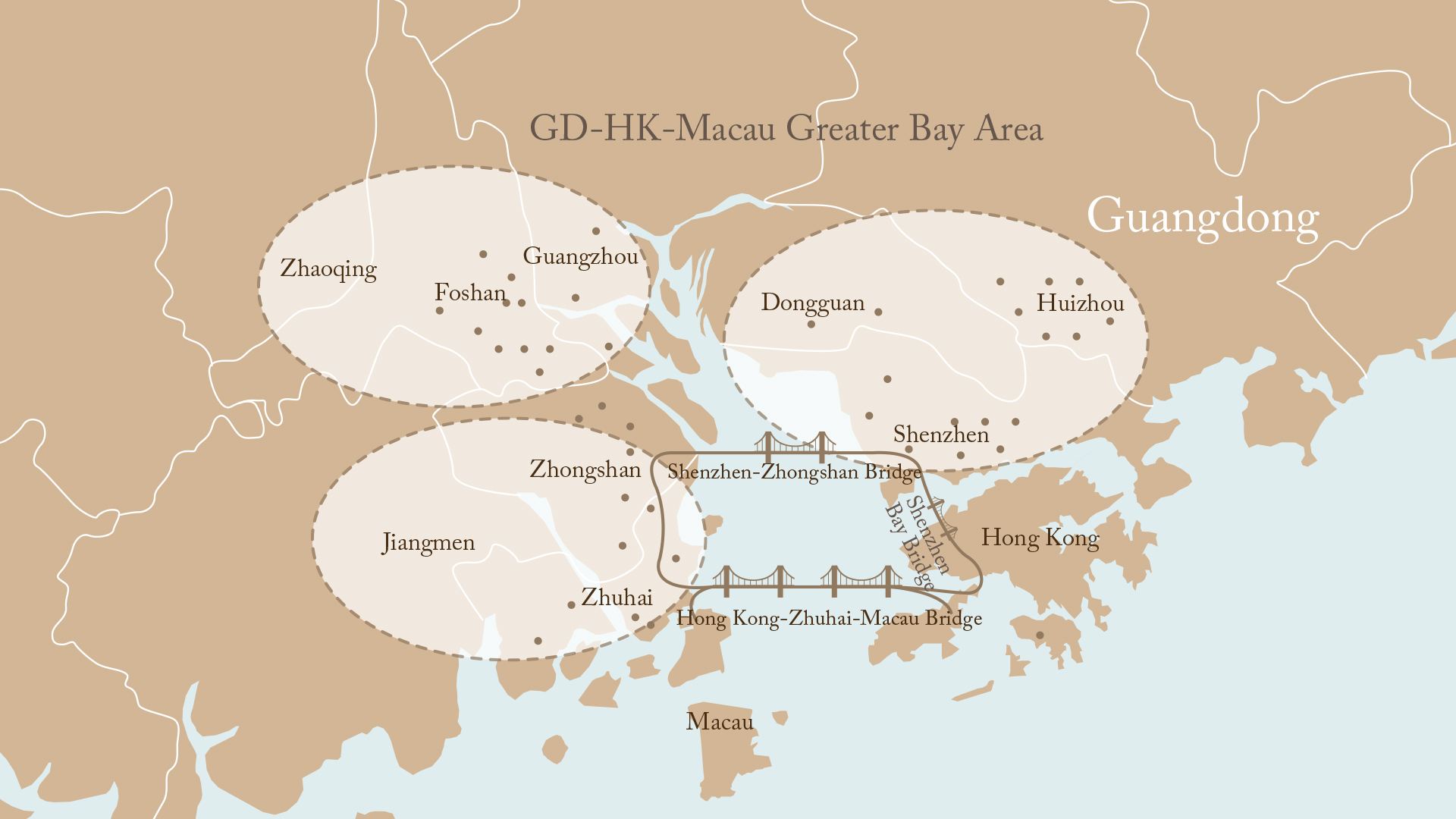
The Guangdong-Hong Kong-Macao Greater Bay Area, made up of nine cities in Guangdong province plus Hong Kong and Macao, will become the largest of the world’s top four bay area commercial regions as well as a top industrial, high-tech, financial and transportation zone.

At about 56,000 square kilometers, the Greater Bay Area is larger than Tokyo Bay, the second-largest bay area worldwide, at about 36,900 sq km. The total GDP contributed by all 11 cities in the Bay Area stood at 11.7 trillion yuan. According to the latest estimate by real estate consulting firm CBRE, the Greater Bay Area will become the world’s top bay area by 2020, when its regional GDP will surpass that of all other bay areas.

In the 19th CPC National Congress, President Xi Jinping said, “Central government would give priority to developing the Greater Bay Area, and boost cooperation between Guangdong, Hong Kong and Macao, to enhance regional cooperation throughout the Pearl delta.”

Economic role

Hong Kong, Guangzhou and Shenzhen have dominated the region for decades, with the highest GDPs and economic growth.

Hong Kong continues to play a major role as one of the world’s leading financial centers. It is a bridge to connect China and global market. Shenzhen is known as China’s Silicon Valley. It has world-renowned technology giants such as Tencent, Huawei, ZTE and DJI. The number of high-tech enterprises in Shenzhen is the highest in the country, and the strength of Shenzhen’s scientific and technological innovation has entered the center of the world stage. As the political and economic center of the traditional Guangdong region, Guangzhou is irreplaceable and can radiate other cities in area. Besides, Dongguan, Foshan, Zhongshan are famous manufacturing industry base.

Talents flow

Prospects appear bright for young people in the area. The opening of the bridge and express rail link will provide additional potential, allowing for greater workplace mobility.

The Bay Area holds promise for established businesses. Steven Lam Hoi-yuen is one example. The co-founder of GOGOVAN, a company in Hong Kong offering a platform for van hire services in Asia, joined a Hong Kong youth delegation and visited cities in The Greater bay area in June.

He said the Greater Bay Area development plan has presented a wide opening for Hong Kong’s young people, and he suggested young people be more open-minded about embracing China’s developing economic power and flex their muscles in the Bay Area.

High-tech Industry and Venture Capital

It is the core content of the construction of Guangdong, Hong Kong, Macao Great Bay Area to build it into a global science and technology innovation center with innovative elements and strong endogenous innovation ability, comparable to the world-famous Bay Area. At the same time, we have created a world-class scientific and technological enterprise. DJI, when it was founded ten years ago, landed in Shenzhen from a research and development project of HKUST.

The development of science and technology innovation enterprises cannot be separated from the help of capital. Through sorting out various types of investment institutions with investment performance in Guangdong, Hong Kong and Macao Bay Area, 2055 of them are VC, PE, strategic investors and FOF, among which PE and VC are the main investment institutions, accounting for 80% of the total, which provides strong capital support for the entrepreneurship and innovation enterprises in Guangdong, Hong Kong and Macao Bay Area.

In Shenzhen, more than 50,000 investment institutions, especially VC/PE, have registered, and more than 10,000 have actually operated. In the past two years, the municipal government has injected 100 billion yuan to promote the guidance of venture capital institutions. Among them, about 70% of all district governments have injected capital. For the first time, 5 billion Angel funds have been set up in various regions to support excellent and promising small and micro-enterprises.

In Hongkong, Professor Li Zexiang of HKUST, in collaboration with Mr. Pony Ma, founder of Tencent and Mr. Neil SHEN, global executive partner of Sequoia Capital, launched the Hong Kong X Project to tap the potential of young people’s innovation and entrepreneurship in Hong Kong and promote scientific research in Hong Kong from laboratory to application market.

Bright future

In fact, it is a plan for cities in this area to play their own advantages and avoid shortcomings, so that the region will gradually form a development model of “Hong Kong, Macao + Mainland + Service + Capital + Industry”, while avoiding overcapacity and fierce internal competition in urban division of labor, facility construction, industrial structure, and port function, achieving a rational coordination mechanism.

Once the official development plan is released, the path of the Greater Bay area will be clearer.

Authors: LIU, Zhuoyang 20559100; LIN, Zhiyan 20560264

The Difficulty of Buying Train Tickets Under Chunyun and Its Solution

Going home for the Chinese New Year is the most important trip for Chinese people in a year. No matter how far the road is, everybody wants to go home for the Chinese New Year to spend their time with families and enjoy the holiday together. But not everyone can have the opportunity to go home since it is hard for them to buy the train tickets or high-speed rail tickets during the Chinese new year peak period. Famous actor Wu Jing made a speech on his Weibo: As long as you can go home, sit anywhere. Below his words, there is a picture of himself sitting in the train’s corridor. This kind of situation has made us start to wonder what makes people have trouble in getting train tickets during the Spring Festival. Is it because of the shortage of railway supply? Can the flexible train fares solve the problem? What can the government do?

It is reasonable to believe that the shortage of railway supply will increase the difficulty of ticket purchase. Before the Spring Festival, the passenger flow is concentrated in a short period of time, that is to say, the earlier half of the Chunyun starts from January 28th to February 4th. As the Spring Festival draws to a close, the country’s railways begin to have an extra busy time between February 8th and February 18th. The overall Spring Festival travel season is nearly 20 days. 4787 pairs and 4,860 pairs of trains are scheduled to be operated every day before and after the Spring Festival, and 413 million passengers are expected to be sent. But compared to the overall demand of nearly 3 billion passengers, the limitation of the railway transportation capacity will increase the difficulty of the train tickets purchase. 

From April 28th 2018, the China railway administration proposed that the railway department will reduce the fares of 28 G-series high-speed trains during the off-season. In the future, the fare will be flexibly floated according to the market supply and demand situation, and the “one-day price” will be gradually implemented. It is acknowledged that under the market economy and free competition conditions, commodity prices will not be static. The floating price system can solve the problem of ticket purchase since increasing the ticket price will reduce the ticket demand. Reasonable as the opinion sounds, it can not bear much analysis. According to the report of the World Central Bank, the poverty headcount ratio of China at 5.5$ a day (2011 PPP) is around 27%. For these people, their annual income is less than 8,000 RMB. Most of them are rural population and struggling on the edge of the poverty line. In order to survive, many people go to big cities as migrant workers. The increase of train tickets price during the Chinese New Year will make it impossible for them to go home. Therefore, if all train tickets are raised due to high demand, it will lead to social instability. Market-based fares may solve the problem of difficulty in buying tickets during Spring Festival in the short term, but in the long run, it is not conducive to the harmony and stability of the whole society. As economists, we can’t just consider the interests of some people that only the rich people can get train tickets. What we can do is to treat the normal-speed train and the high-speed rail differently. That is to say, on the one hand, try to maintain the price of the normal-speed train, and on the other hand let the high-speed rail fares fluctuate with the changes in ticket demand so that passengers can choose their own way to go home according to their own needs and economic conditions. 

Nowadays, what the government can do is to increase the supply of railways and reduce unreasonable controls on the bus and aviation sectors, so that other transportation departments can work with the railway sector to relieve the tension of the Chunyun.

Firstly, during the Spring Festival, the operational capacity of the train has reached its maximum. In order to meet the huge demand, the government can build some new railway lines. But this operation requires a lot of financial support since building new railway is costly.

Secondly, the high tolls, high gas price and unreasonable controls for bus company cause the bus fares to increase which will reduce the demand of the bus tickets and may cause a further increase in demand for railway tickets. In China, the highways charge road tolls of 5 yuan per kilometer. Take Sichuan to Dongguan as an example, the whole journey is around 1,500 kilometers, then each passenger will need to pay a highway toll fee of 166 yuan. Furthermore, China’s highway tolls do not include fuel taxes. The fuel tax is added to the fuel fee. For example, the fuel price is 6 yuan per liter and 1500 kilometers requires about 450 liters of gasoline, so the fuel cost for each person is 60 yuan. At last the cost price of the bus company (excluding labour cost and others) is 226 yuan per passenger. What’s more, China’s bus transport market is under controls that government do not allow private companies to open bus lines without authorization, thus increasing control costs which are ultimately borne by passengers. Reducing bus controls can reduce management costs and allow fares to fall, at the same time, the reduction in regulations will allow bus companies to change line settings at any time based on market changes. To that end, during the Spring Festival, the bus company can always open new lines in time to meet the additional needs with lower prices. 

Similarly, the air traffic control also raises the price of plane tickets. According to the control policy, airlines need government approval to open new routes, and the existing routes have operating time limits. If the government let the airlines which meet the requirement have contact with the airport to operate the new route without the need for government approval, the supply of the aircraft line will increase and the price of the air ticket will reduce, thus the pressure on the railway operations will further reduce. 

Overall, by reducing the control of bus company and civil aviation, redesigning the entire transportation market will increase the overall transportation capacity to meet the huge transport demand, and alleviate the operational pressure on the railway.

In the end, one of the most important reason why the Spring Festival is called “the largest-scale periodic migration of human beings” is that the uneven development between urban and rural area, which is an economic problem that every developing country will face. However, we believe that with the development of the entire economy and the support from the government, the transportation problem during the Spring Festival will be resolved gradually.

Authors: LIU,Siyu 20566141; ZHOU,Xiaoying 20565159