
- The meeting of the 20th China Development Forum gathered together five experts and business leaders to discuss how to achieve a higher level of urbanization as a new driving force of the Chinese economy.
- Li Tie, director of the Center for Reform and Development of Chinese Cities and Small Towns, speaks about China urbanization at the meeting of the 20th China Development Forum held in Beijing on Feb. 16, 2019.
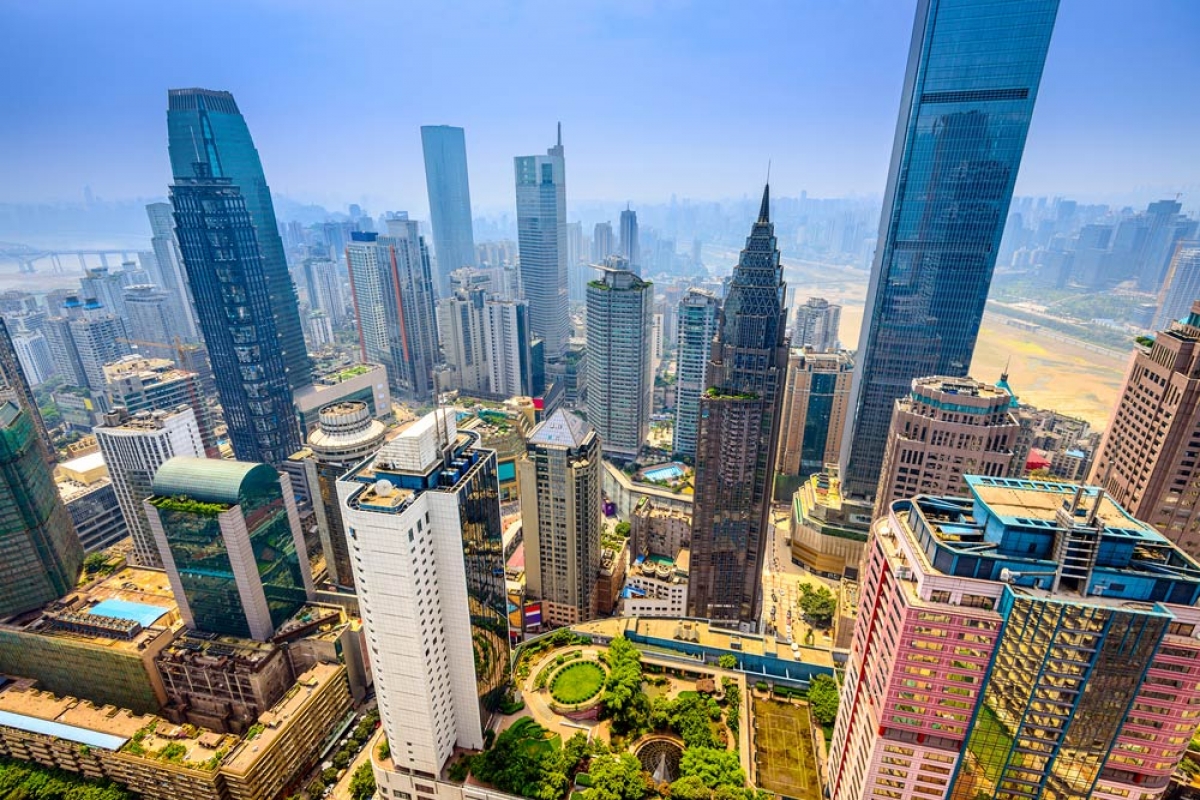
China’s Great Step in Urbanization
2018 marked the 40th anniversary of reform and opening-up in China. To a large extent, reform and opening-up liberated China’s social productive forces, which drastically changed China’s urban and rural areas, improving people’s lives and livelihoods. In this sense, urban development is the concentrated embodiment of the achievements of China’s reform and opening-up.
During the four decades of reform and opening-up, China has experienced the largest and fastest industrialization and urbanization in the world. Many new cities have come up.
Urbanization Drives Growth of Domestic Demand
From the external environment, with the emergence and development of trade frictions, the external environment of China’s development has undergone tremendous changes. Under the escalation of demands for domestic demand, urbanization has become a powerful option for stimulating domestic demand. Relying on high investment development model is not sustainable for the economy situation any more. At this time, we must rely more on marketization and urbanization.”
From the experience of some other countries, such as Japan and Korea, we can see that when the rate of urbanization is below 60%, the economic development of these countries was on the upward trend; and when the rate is above 60% even 70%, the economic growth rate declined rapidly and developed at a low level. It can be seen that the above-mentioned countries rely on domestic demand and urbanization to promote their economy, and urbanization is a very important factor.
The Sustaining Urbanization Dividend
According to the data in 2018, China’s urbanization rate of permanent residents approached 60 percent last year; however, the rate of officially registered residents was estimated to be around 44 percent. It means many people work in the cities but have rural household registration documents, which means they don’t have access to the same welfare amenities as those registered in cities.
Generally speaking, the period that the urbanization rate rises from 30% to 70% is a period of rapid urbanization. Among them, the urbanization rate of 50% is an important turning point. Taking this as the boundary, the interval of 30% to 50% is the acceleration period; the interval of 50% to 70% is the deceleration period (Wei Houkai, 2011). “China would continue to enjoy the urbanization dividend for between 15 and 20 years, as the urbanization rate of registered residents increased to 70 percent.” Li believes that urbanization will have a positive impact on stimulating consumption growth and driving employment growth. It will be a process of transforming migrant workers into urban citizens and using consumption to raise the quality of life in cities. In addition, with urbanization, the commercialization of agricultural products will be promoted, and the agriculture structure will be adjusted; on the other hand, the full flows of rural resources can also feed-back cities and towns.
Transformation of Urbanization
Seeing from the current situation, the urbanization is facing a transformation crisis. In terms of the internal relationship between cities, “At present, the internal relationship between Chinese cities is not an equal market competition, but a hierarchical relationship. There is a core city in the urban cluster that drives the surrounding cities.” High-tier cities develop real estate through land sales, and the continuous expansion has led to the growing and increasing cost of urban shops. Excessive land prices do harm to the population entering the city and the realization of urbanization dividends. Excessive costs have created a natural gap between cities and peasants entering the city, hindering further urbanization and declining urban inclusion.
In view of the above situation, we should first respect the laws of the market that we should not exclude the population or exclude industries through administrative means. At the same time, we should also reduce costs, allow resources to flow to low-cost space, and release more vitality of small cities and small towns, the vitality of the peasants entering the city and the potential vitality of releasing the land.
Secondly, we should solve the division within the urban agglomeration. We should establish an integrated cooperation incentive mechanism and guarantee mechanism, such as the assessment of cross-regional urban agglomerations, and the integration of urban agglomeration development with central financial transfer payments and audits of major projects such as infrastructure. Etc., thereby promoting the development of urban agglomerations.
In addition, a series of market-oriented reforms should be promoted, such as peasants’ transformation into urban inhabitants, household registration system, social security, cross-provincial cross-border, and so on. At the same time, we should vigorously implement the link between people and land to achieve a balance between supply and demand, optimize the spatial layout, promote the balance of occupation and residence, develop rail transit and connect the cities, and improve large urban population control policies, building an international metropolis, and enhancing urban vitality.
References
Wei Houkai, 2011: “China’s Urbanization Strategy Adjustment Thoughts”, “China Economic and Trade Guide”, Issue 7
Zhang Liying, China.org.cn, February 20, 2019: “Reforms needed to fully unlock potential of China’s urbanization”
 8fishhkust